LTX-2.5: Free Open-Weights AI Video in 6.8 Seconds

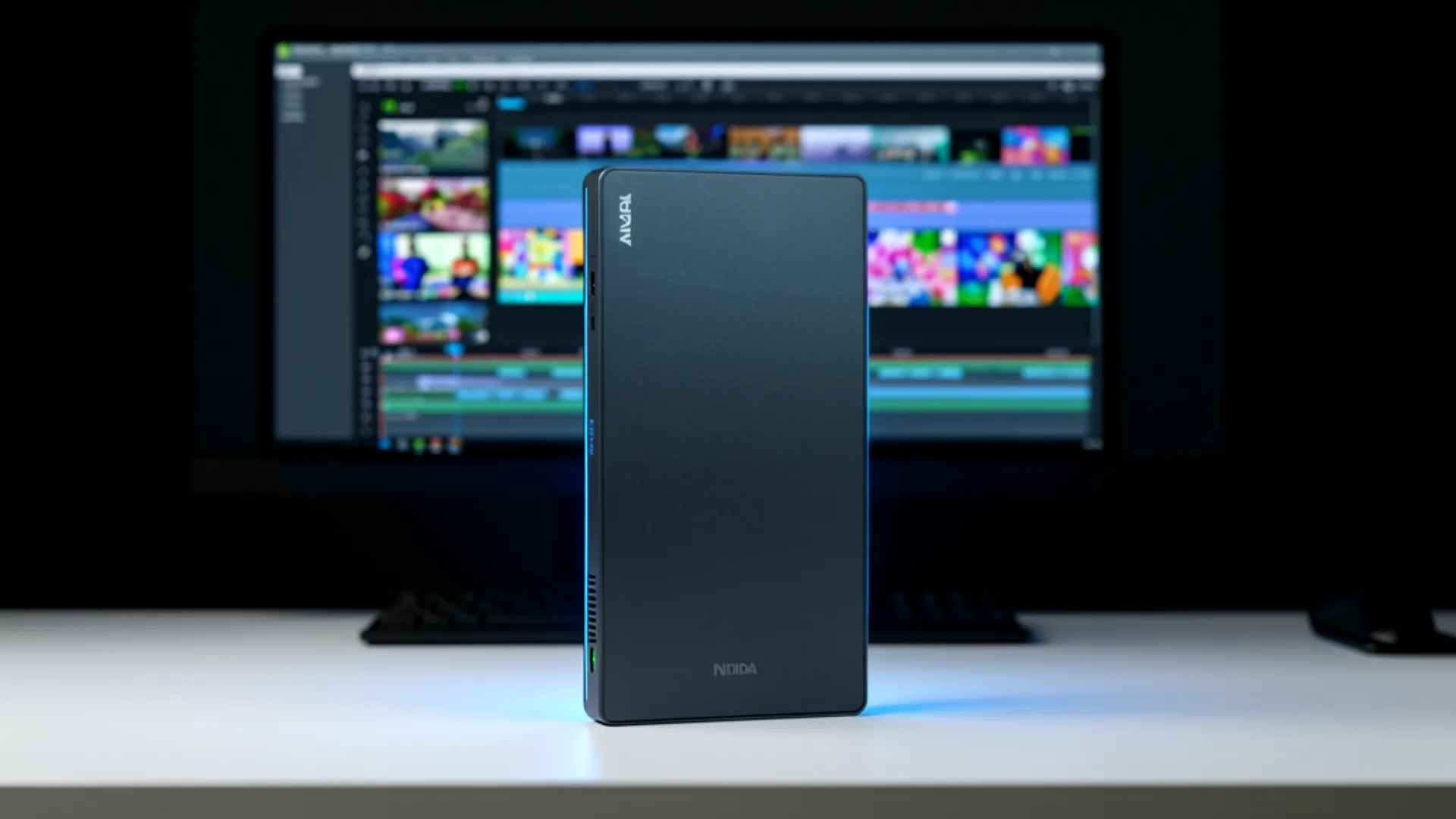
LTX-2.5, the open-weights video and world model from Lightricks, launched on August 11 with a speed claim that challenges every closed rival: a 10-second, 720p clip generated in 6.8 seconds on NVIDIA hardware. The model is free for organizations under $10 million in annual revenue, ships with day-one ComfyUI integration, and has already crossed 33 million downloads across the LTX model family.
Key Takeaways
- Generates a 10-second video in 6.8 seconds on NVIDIA GB200 chips, faster than real-time playback
- Open weights on Hugging Face, free for organizations under $10M annual revenue
- Native day-one ComfyUI integration with text-to-video, image-to-video, and multishot workflows
- Native multishot generation holds characters, scenes, and voice consistent across cuts
- Costs $0.90 per 10-second clip via managed API, undercutting most closed rivals
Compare AI Video Generators
See how Kling AI stacks up against open-source alternatives for video generation speed, quality, and pricing.
Read Kling AI Review →What LTX-2.5 Delivers
LTX rebuilt nearly every stage of its generation pipeline rather than patching features onto the older LTX-2.3 core. Five structural changes define the release.
A Diffusion Video Decoder reduces artifacts in high-motion footage and reconstructs fine detail like text and facial features without sacrificing the model’s compression ratio. Previous LTX versions struggled with rapid camera movement; this decoder allocates rendering compute based on scene complexity.
Native multishot generation produces a full sequence as a single output. Characters, environments, lighting, and voice remain consistent across cuts without post-production stitching. For creators building short-form content or storyboards, this eliminates the continuity problem that plagues shot-by-shot generation.
A custom Gemma 4 language backbone and dedicated prompt enhancer handle complex multi-character prompts more accurately. LTX says the prompt enhancer significantly improves adherence to long, detailed descriptions compared to its predecessor.
The model also ships a pretrained checkpoint for physical AI and robotics, giving teams a base to fine-tune on domain-specific data. A distilled version delivers near-full quality at lower cost and reduced inference time, optimized specifically for NVIDIA RTX GPUs with reduced VRAM requirements.
- Generation Speed (10s clip, self-hosted)
- 6.8s
- API Cost (10s clip, Fast tier)
- $0.90
- Total Downloads (top open model)
- 33M+
- Min VRAM (consumer RTX GPUs)
- 16 GB
How Fast It Actually Is
The 6.8-second figure requires context. LTX measured that speed on two NVIDIA GB200 superchips at steady state, hardware most independent creators will never touch. Through LTX’s own managed API, the same 10-second clip took 23.7 seconds at 1080p resolution.
Both figures still represent a significant gap over the competition. LTX’s end-to-end measurements of rival APIs on the same image-to-video task showed Google’s Gemini Omni Flash at 52 seconds, Veo 3.1 at 70 seconds, MiniMax H3 at 180 seconds, ByteDance’s Seedance 2.5 at 317 seconds, and Kuaishou’s Kling AI 3.0 Pro at 398 seconds.
Speed is only one axis. For creators choosing a subscription platform instead of self-hosting, our best AI video generators comparison weighs output quality, pricing, and free plans together.
AI video generation cost comparison: 10-second 720p clip with audio (August 2026)
| Model | Cost per Clip | Key Advantage |
|---|---|---|
| Veo 3.1 Lite (Google) | $0.50 | Cheapest closed API rate |
| LTX-2.5 Fast (Lightricks) | $0.90 | Only open-weights model; free self-hosting under $10M |
| Veo 3.1 Fast (Google) | $1.00 | Cheapest path to 4K via closed API |
| Gemini Omni Flash (Google) | $1.00 | Quality leader in independent arenas |
| FLUX 3 Video (Black Forest Labs) | $1.70 | First to ship 20-second clips with audio |
| HappyHorse 1.0 (Alibaba) | $1.82 | Strong arena quality scores |
| Veo 3.1 Premium (Google) | $4.00 | Only model with clip extension beyond single generation |
On quality, LTX shared vendor-reported blind preference tests showing a 67% win rate, ahead of Seedance 2.5 at 65% and Gemini Omni Flash at 55%. These results are not independently verified. The Artificial Analysis text-to-video arena, the closest thing to neutral ground, currently ranks Gemini Omni Flash first and does not yet score LTX-2.5.
The ComfyUI Partnership
LTX chose ComfyUI as its launch platform for a reason. The node-based workflow tool, which started as an open-source Stable Diffusion front-end in 2023, has become the standard environment for testing and deploying new generative media models. Comfy Org raised $17 million and now serves as the prototyping layer for much of the open AI creative tooling ecosystem.
Day-one integration means three built-in workflow templates ship immediately: Text-to-Video, Image-to-Video, and First/Last-Frame-to-Video. Creators can run the model locally with downloaded weights or use LTX API nodes for cloud generation without a local GPU.
LTX CEO Zeev Farbman was direct about the strategy: “A whole lot of our customers start their journey inside Comfy, so day-zero support is effectively our customer acquisition channel.”
Info:
LTX-2.5 weights are hosted in a gated Hugging Face repository. You need to accept the license and wait for access approval before downloading. The model requires at least 16 GB of VRAM for local inference.
The Open-Weights Bet
LTX’s licensing model sits between fully open-source and closed API. The LTX-2.x Community License lets organizations below $10 million in annual revenue use, modify, self-host, and sublicense the model for free. Larger companies negotiate paid licenses. Even above the threshold, evaluation in non-production environments remains free.
Farbman framed the strategy against the industry trend toward closed APIs: “Around the time Sora came out, we realized all the big players are closing their models. Working through APIs just doesn’t work for many businesses.” His argument is that video models have a fundamentally wider surface area of use cases than language models, making weight access more critical for customization.
The openness comes with limits. The license sweeps in not just fine-tuned checkpoints and LoRA adapters but also distillations and any model trained on LTX-2.5’s synthetic outputs. A company generating training data with LTX-2.5 to train a separate model has, by the license’s definition, created a derivative bound to the same agreement.
Try Kling AI Video Generation
Generate AI videos with native 4K output, motion control, and multi-shot sequences. Start with the free plan.
Try Kling AI Free →Where This Leaves the Market
LTX-2.5 arrives in a market that has shifted rapidly since our January coverage of NVIDIA RTX and LTX-2. The open-weights AI video space now has a model that competes on speed and approaches closed rivals on quality, while remaining free for most independent creators.
The release is part of NVIDIA’s August “local AI” spotlight, launching alongside the Nemotron 3.5 Lightning agent model. The shared message: open models running locally are becoming default production infrastructure rather than a compromise.
For creators currently paying per-clip rates on closed platforms, LTX-2.5 offers a clear alternative if they have the hardware. For those without local GPUs, the managed API at $0.90 per clip positions it as the second-cheapest option behind Google’s Veo 3.1 Lite.
The competitive response will be worth watching. Kling AI, which recently launched its own native 4K generation and multi-shot features, took 398 seconds in LTX’s benchmarks for the same task that LTX completed in under 7 seconds on premium hardware. Whether that speed gap translates to creator adoption depends on quality consistency, which independent benchmarks have yet to confirm.
FAQ
Is LTX-2.5 free to use?
Yes, for organizations under $10 million in annual recurring revenue. You can download the open weights from Hugging Face, self-host on your own hardware, and use it commercially without paying licensing fees. Organizations above the threshold negotiate a paid license with Lightricks.
How fast is LTX-2.5 compared to Kling AI and Seedance?
LTX claims 6.8 seconds for a 10-second clip on NVIDIA GB200 hardware, compared to 317 seconds for Seedance 2.5 and 398 seconds for Kling 3.0 Pro on the same image-to-video task. Through its managed API, LTX-2.5 generates the same clip in 23.7 seconds at 1080p.
How do I run LTX-2.5 in ComfyUI?
Update ComfyUI to the latest version, request access to the gated Lightricks/LTX-2.5 repository on Hugging Face, accept the license, and download the model files into your ComfyUI models directory. Three workflow templates (Text-to-Video, Image-to-Video, First/Last-Frame-to-Video) are available immediately. You need at least 16 GB of VRAM.
What is an open-weights AI video model?
An open-weights model publishes its trained parameters publicly, letting anyone download, run, and fine-tune it locally. Unlike open-source (which implies no usage restrictions), open-weights models like LTX-2.5 ship with custom licenses that may restrict commercial use above certain revenue thresholds or define derivative work obligations.
Can LTX-2.5 generate videos with audio?
Yes. LTX-2.5 generates synchronized video and audio in a single pass. The multishot feature also maintains voice consistency across cuts, making it suitable for narrative sequences and short-form content production.
Sources
- LTX-2.5 can generate a 10-second AI video in just 6.8 seconds on Nvidia superchips - VentureBeat, August 11, 2026
- The Video Production Stack Now Fits on One Desk: LTX-2.5 Launches - MarkTechPost, August 11, 2026
- LTX-2.5 Targets Real-Time Video Generation - Open Source For You, August 12, 2026
- LTX-2.5 ComfyUI Documentation - ComfyUI Docs
- Lightricks/LTX-2.5 Model Repository - Hugging Face